
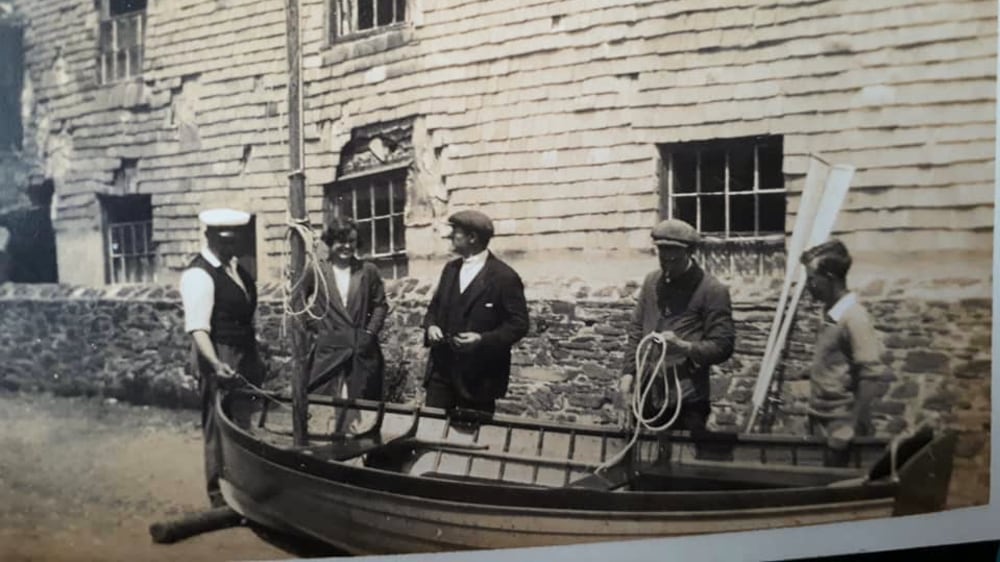

Down Memory Lane – 6th October 2026
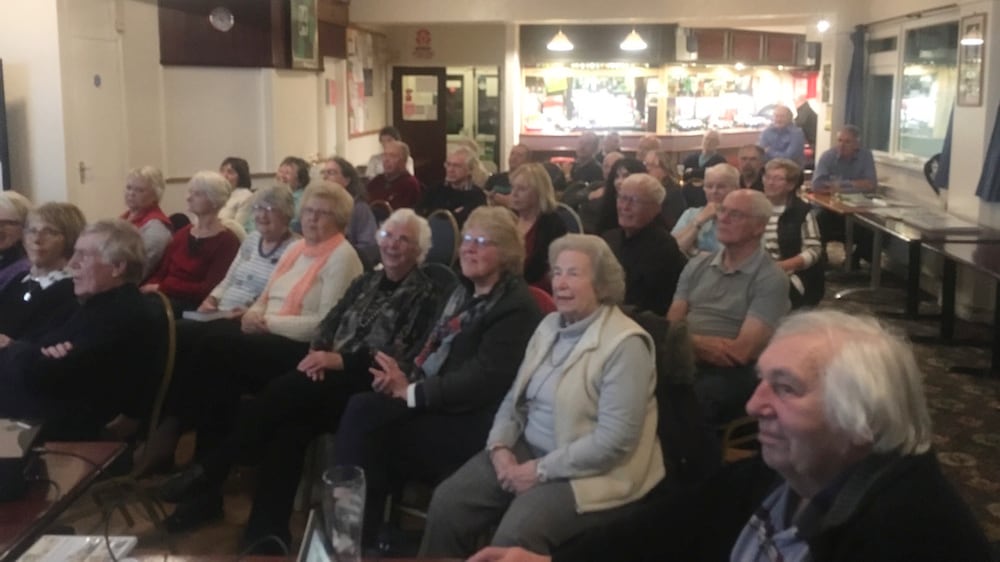
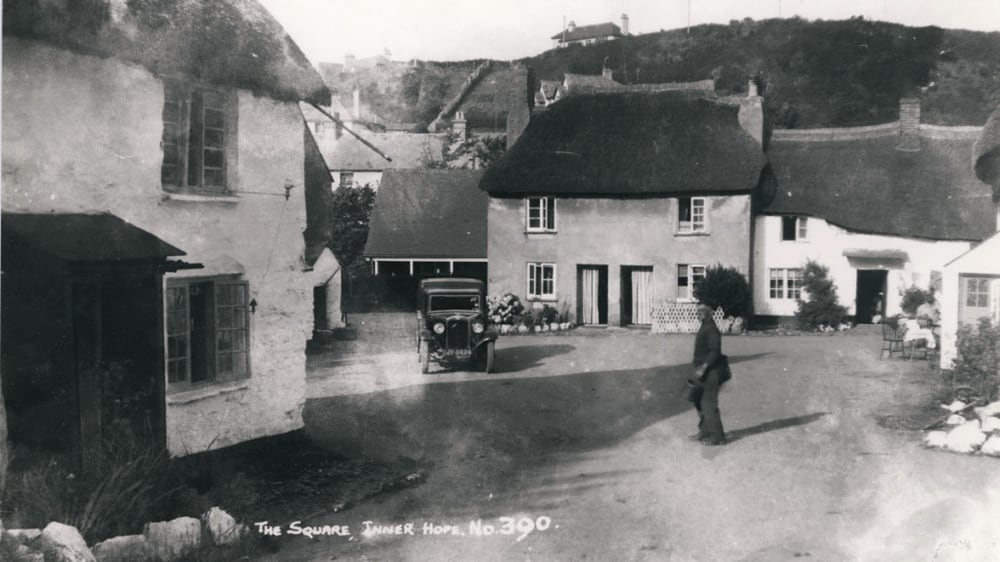
Our annual “Down Memory Lane” evening takes place on Tuesday, 6th October 2026, when Roger Barrett and Geoff Foale will once again take us on a journey through photographs and memories of our local area.
This popular evening is always an opportunity for members to contribute their own knowledge and recollections as photographs of people, places and events from living memory appear on the screen. Although Salcombe will naturally feature, the evening will range more widely across the communities around the Salcombe-Kingsbridge estuary, including Kingsbridge, Malborough, Hope Cove and East Portlemouth.
We can expect a fascinating look at how the area has changed, including some reminders of earlier forms of travel – from the paddle steamers serving Kingsbridge and Salcombe to the ferry connection with Plymouth.
Join us at Salcombe Rugby Club, Camperdown Road, Salcombe TQ8 8AX. Doors open at 7.00pm, with the presentation beginning at 7.30pm.
We look forward to seeing you there and to another lively evening of photographs, discussion and recollection.
The Dom van Keulen: Identifying the Salcombe Cannon Wreck
For almost three decades, the identity of Salcombe’s celebrated Cannon Wreck remained uncertain. The archaeological evidence established much about the vessel and its cargo: the extraordinary collection of more than 400 Moroccan gold coins, jewellery, bullion, Dutch and English ceramics, pewter, cannon and other material pointed towards a seventeenth-century trading vessel engaged in the movement of goods between North Africa and northern Europe. Yet the name of the ship itself remained elusive.

Zaydan Abu al-Ma’ali al-Nasir gold coin, 1603-1628, Morocco.
Salcombe Cannon Wreck site
That changed with the publication this year by the British Museum of From Morocco to the Coast of England: The Story of the Dom van Keulen and its Remarkable Cargo, edited by Venetia Porter and Dave Parham. The book brings together almost thirty years of archaeological investigation, with contributions from archaeologists, historians, numismatists, conservators and other specialists, and identifies the wreck as the Dutch trading vessel Dom van Keulen (Cathedral of Cologne), lost off the Salcombe coast in 1633.
The identification illustrates the value of combining archaeological and documentary evidence. The wreck had already provided unusually precise clues about its geographical and commercial connections. The Sa’dian gold coins and Moroccan jewellery demonstrated links with Morocco, while Dutch pewter and other artefacts indicated a northern European connection. A single copper coin from Friesland, dated 1627, was among the evidence pointing towards the Netherlands.

“A View in Cologne” (painted about 1660-5) by Jan van Der Heyden.
Cologne’s half-built medieval cathedral – building work had stopped 100 years before.
The object topping the right hand tower is the original medieval crane
The decisive documentary work was undertaken by maritime historian Ian Friel. Research in the National Archives located records relating to the Dom van Keulen and its final voyage. The vessel had sailed from Morocco towards the Netherlands in the autumn of 1633, and contemporary documentation records the ship encountering severe weather. The documentary and archaeological evidence could then be collectively assessed, allowing the previously anonymous wreck to be associated with a named vessel and a specific voyage.
The significance of the discovery extends well beyond establishing a name. The wreck provides unusually direct evidence for the commercial connections linking Morocco, the Low Countries and Britain during the early seventeenth century. The gold itself is particularly important. The coins, issued under the Sa’dian rulers of Morocco, constitute a substantial bullion hoard, while the cut jewellery and gold ingots indicate that gold was being transported as a commodity rather than simply as personal wealth. Their study contributes to a better understanding of Moroccan monetary history and the wider trade in African gold.
Other finds provide an altogether different perspective. Fragments of the vessel, rope and timber, together with pottery, pewter, a clay pipe, botanical remains and even surviving medicinal and food materials, offer evidence for the practical circumstances of life aboard an early modern merchant vessel. The British Museum publication brings these strands together through specialist studies of the coins, jewellery, ship construction, ceramics and other material. It is consequently more than an account of a wreck: it is a study of the maritime economy and material culture of the period.
The wider archaeological importance of the Salcombe site should not be overlooked. The Bronze Age material found within the protected area represents a separate and much earlier episode of maritime activity. Historic England records the Bronze Age collection as distinct from the seventeenth-century wreck, with swords, rapiers, palstaves, an adze, gold and other objects dating principally to the Middle Bronze Age. The material has been associated with the wider network of prehistoric maritime exchange represented by the Salcombe B and Moor Sand discoveries.

The recently recovered Bronze Age sword (SWMAG)
Finding these two wrecks in the same place demonstrates the exceptional archaeological importance of this location just outside Salcombe. On this single stretch of coast, evidence survives of long-distance sea trade separated by nearly 3,000 years. While the Bronze Age objects shed light on ancient trading networks that crossed the English Channel, the Dom van Keulen gives us an incredibly detailed window onto global trade in the seventeenth century.
The identification of the Dom van Keulen therefore marks not the end of the story, but an important new stage in the study of one of Salcombe’s most significant archaeological sites.

“From Morocco to the Coast of England: the story of the Dom van Keulen and its remarkable cargo” Venetia Porter and David Parham, British Museum, £40 or free eBook ISBN 978-0861592388.
South Hams Vintage Rally and Kingsbridge Show
The History Society and Salcombe Maritime Museum joined forces to exhibit at the South Hams Vintage Rally on 8th and 9th August and at the Kingsbridge Show on 5th September. With the unusually warm weather both events were very popular this year. At the Kingsbridge Show we had the extra bonus of being in the same tent as Cookworthy Museum. Thank you to all volunteers who staffed our stalls.

Roger Barrett and Colin De La Mare at South Hams Vintage Rally

The joint History Society and Maritime Museum stand at South Hams Vintage Rally

Tractor ploughing at South Hams Vintage Rally

Cable ploughing at South Hams Vintage Rally

Cable ploughing tractor, probably a Saunderson Model G, at South Hams Vintage Rally
We are always pleased to hear from you, so if you have a question about Salcombe’s history or a family connection with the town, please get in touch. We would also be delighted to receive any photographs, documents or other material relating to Salcombe’s past that you think may be of interest.
Please send enquiries and material to info@salcombehistorysociety.co.uk.
Poster of “Down Memory Lane” courtesy of What’s on in Salcombe. Image of Zaydan Abu al-Ma’ali al-Nasir gold coin copyright Trustees of the British Museum. Shared under a Creative Commons Attribution-NonCommercial-ShareAlike4.9 International (CC BY-NC-SA 4.0) licence. Image of “A View in Cologne” copyright National Gallery, London, NG866 Creative Commons CC-BY-NC-ND 4.0. Image of Bronze Age sword courtesy of South West Maritime Archaeological Group.
0 Comments